Tuesday, June 29, 2010

Butterflies from WV Mountains

It has been in the nineties here for weeks to hot to garden or do nature walks. This evening I was watering the veggy garden and noticed a long thin damselfly. I caught it with my hands and carried it inside to check Ed Lam's book to be sure. It was indeed a male Slender Spreadwing the first record in Orange County in about 20 years or more! Then once I was sure of the ID I let it go outside and it flew away happily!

So here we go some of my best photos of the many species from our visit to Spruce Knob a week ago.


Pink-edged Sulphur, Colias interior on Ox-eyed Daisy
This is a northern species, it feeds on blueberries.
We saw hundreds of them on this trip what a delight, more photos below.
Pink-edged Sulphur on Red Clover.

Here we have a female albino sulphur. With these you can not tell for sure if it is a Clouded or Orange Sulphur. This was my first one this year.
Here we have an Eastern Tiger Swallowtail that has much more yellow in the hindwings than I have ever seen in our area.

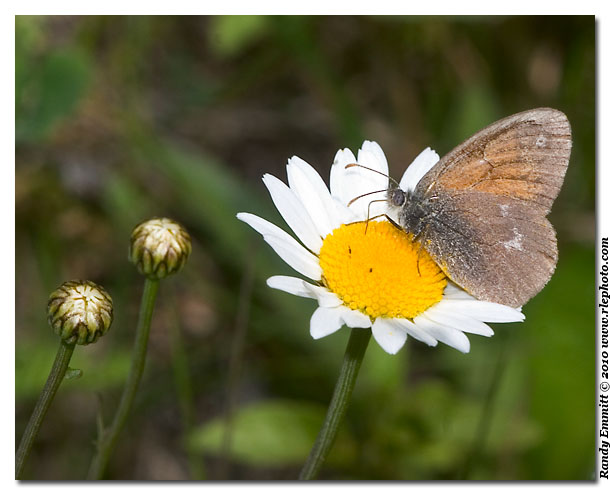
Common Ringlet, Coenonympha tullia
We saw maybe 40 to 50 of these butterflies. Back in 2003 I saw thousands of them in this area. Another northern species.
Another northern species the Harris' Checkerspot, Chlosyne harrisii
Saw only 5 this trip and as you can see they were past their prime.
See my website for better photos and info on them.
The Fritillaries!
Meadow Fritillary, Boloria bellona
The smallest of our frits. This one was checking out fresh deer bones along Gandy Creek.

Normally in the eastern US fritillaries are not hard to tell apart. But given Spruce Knob has both Atlantis and Aphrodite Fritillaries telling these two apart is pretty tricky. When I took this I thought it was an Atlantis Fritillary, but a closer look leads me to Aphrodite Fritillary, Speyeria aphrodite. See my page on this species.
Above and below are Atlantis Fritillary, Speyeria Atlantis on Common Milkweed
The above photo was one of those Oh, wow photos knowing it was special before I chimped it.
If you do not know what chimping is, it is when you take a digital photos and you look at the display. See my page on these butterflies.
A Red Admiral, Vanessa atalanta on Viper's Bugloss, Echium vulgare a very good nectar plant for butterflies, from Europe and Asia though....
My page on Red Admirals. 
Here is a female Mourning Cloak, Nymphalis antiopa She was laying eggs in the only willow bush at the top of Spruce Knob the highest elevation in West Virginia. That willow has always had Mourning Cloaks every time I have visited there. This one was drying off after a quick thunder shower that came in while I was photographing the Gray Comma below.
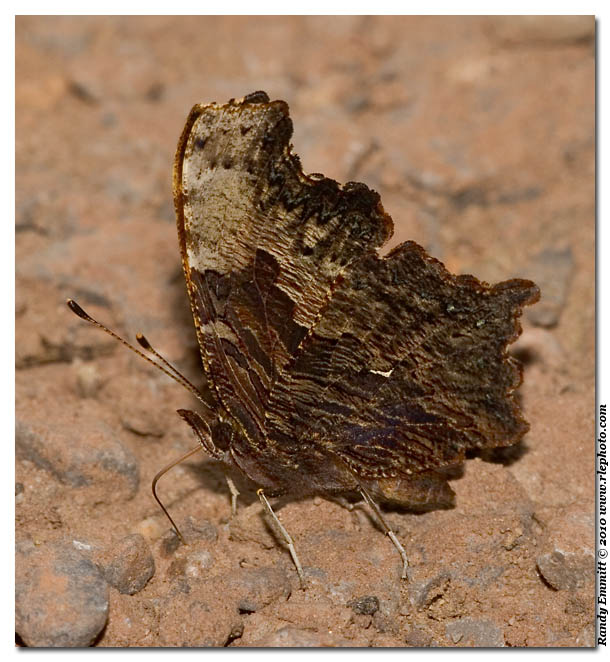
This Gray Comma, Polygonia progne was hunkering down for an approaching thunder storm. I grabbed the spruce limb and pulled it down, the big camera could not focus one handed. It was a strong limb to pull down so I got out my trusty G11 Canon point and shoot and took this photo from an inch away well over my head with one hand. BTW Meg had already fled to safety in the car, I was thinking this might be the elusive Green Comma which I have not yet seen.

Our first stop in the West Virginia mountains led  us to this rare Gray Comma above and below. It even nectared on a daisy but I failed to get a photo. We saw 4 of these at different sites over the two days were were there. Four might have doubled the number of Gray Commas I have seen.
Along Gandy Creek I found hundreds of grass skippers on these deer bones. The dark ones with lighter centers are Peck's Skippers usually 6-8 a day is a good day for them, this spot had close to one hundred of them. The other plain looking skipper is the European Skipper which we saw at least a thousand of them over the two days we were there.  If you found flowers that butterflies liked it was a sure bet European Skipper would be seen.

In case you did not notice every butterfly species shown above has a link to my pages on that species, feel free to check them out.

Saturday, June 26, 2010

Odes from WV 2 day trip!

This past week we stopped on the way back from my nephews wedding to camp at Spruce Knob in the mountains of WV. One Monday and Tuesday I spent about 6 hours a day trekking around Spruce Knob Lake and a beaver pond ditch below the lake. Also looked around Gandy Creek for odes as well.

I'll do a post after this with a lot of butterfly photos as soon as I get a chance.

 Male Superb Jewelwing, Calopteryx amata


Female Superb Jewelwing photo above and below.
These were found along Gandy Creek. Gandy Creek only had Superb and Ebony Jewelwings and Common Whitetails.
Hagen's Bluet, Enallagma hageni (male)
These are hard to ID just from a photo like this, so I could be wrong on the ID.
I featured this damselfly on another recent posting it is a male
Aurora Damsel, Chromagrion conditumFound at the back of Spruce Knob Lake and a singleton along Gandy Creek
More on this species at Jim Bangma's website

Variable Dancer, Argia fumipenni or Violet Dancer, Argia fumipennis violacea (male)
The Variable Dancers where we live have amber tinted wings, these northern ones do no have tinted wings.
The above photo is a female Eastern Forktail, Ischnura verticalis
and the photo below is the male Eastern Forktail.
There are records of this species in our area but I have failed to find them, in WV they are very common. You can find out more about them at Stephen's website
Brown Spiketail, Cordulegaster bilineata
I saw several of these in the back waters of Spruce Knob Lake and below the beaver pond. They pose nicely for photos. See Jeff Pippen's page for more info.
Not sure on the ID here these are meadowhawks but given the difficulty to ID them I can't say for sure. Female above and male below. My guess would be Ruby Meadowhawk, but it just a guess.
Unicorn Clubtail, Arigomphus villosipes
above and below photos.
These were found in good numbers at the top of the beaver pond and the back of Spruce Knob Lake. Stephen's site on this species
I reported these incorrectly they are male Southern Pygmy Clubtail, Lanthus vernalis
Found lots of these in small rocky creeks perched on the rocks, my first for West Virginia. I have not seen this species in many years since I found females perched in trees in western North Carolina. Will Cook's page on this species

Twelve-spotted Skimmer, Libellula pulchella
Saw more of these than I ever have around the beaver pond there were more than 3 dozen alone flying all about chasing each other. Stephen's page on these.
Chaulk-fronted Corporal, Ladona julia
Saw fewer of these than most of the times I visited Spruce Knob Lake and they usually are easy to photograph, not this year. Jim's page on these.
Calico Pennant, Celithemis elisa (male)
The most common dragonfly we saw.
They were everywhere I estimated seeing at least 150 of them.
Male Dot-tailed Whiteface, Leucorrhinia intacta
My first for West Virginia, I have seen them in Maryland and Pennsylvania
Stephen's page on this species 

Wait until I get to the butterflies!